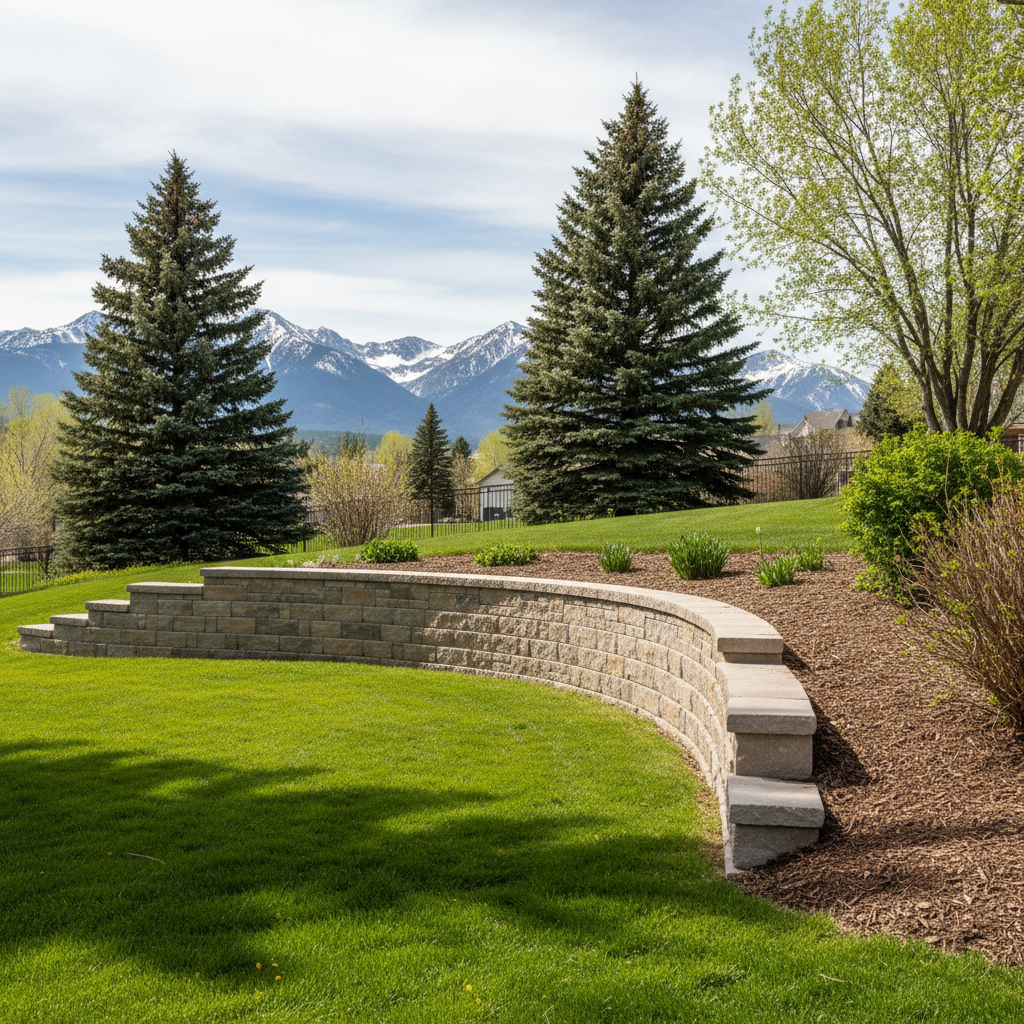
Got a retaining wall on your property? Good. They're pretty essential for managing slopes, carving out usable space, and stopping erosion, especially with the kind of freeze-thaw cycles we get here in Missoula. But, just like anything else built to last, they need a little looking after. You can't just put it in and forget about it, not if you want it to stand strong for decades.
Extending Your Wall's Lifespan
The biggest thing you can do to make your retaining wall last? Ensure proper drainage. This isn't just about the initial build, mind you; it's an ongoing thing. Water is the enemy of any retaining wall. When it builds up behind the wall, it creates immense hydrostatic pressure that can push even the strongest walls right out of alignment or cause them to fail entirely. That's why good drainage systems, like gravel backfill and weep holes, are critical. Keep those weep holes clear! If you see dirt or debris blocking them, clear it out. A simple stick or a hose usually does the trick.
Another important thing is managing the landscaping around it. Don't plant large trees or shrubs too close to the wall. Their roots can grow right into the wall's structure, causing cracks or shifting blocks. Stick to smaller plants, ground cover, or flowers near the base instead. And if you're doing any digging or heavy landscaping uphill from the wall, be mindful not to disturb the soil too much right behind it. That soil, after all, is part of what's holding everything in place.
Regular Maintenance Checks
You don't need to inspect your wall with a magnifying glass every day, but a quick look-over a couple of times a year, especially after heavy rains or the spring thaw, can save you a whole lot of headaches. What should you be looking for?
- Clear Drainage: Like I said, check those weep holes. Make sure water can flow freely out of them. If you see water pooling at the base of the wall, that's a big red flag.
- Surface Condition: Look for any cracks, especially in concrete or mortared walls. Small hairline cracks might just be normal settling, but anything wider than a quarter-inch, or cracks that are growing, are definitely a concern. For segmental block walls, check for spalling or chipping on the blocks themselves.
- Level and Alignment: Stand back and eyeball the wall. Does it look straight? Are any blocks bulging out, leaning, or sinking? Even a slight shift can indicate a bigger problem brewing underneath.
- Soil Erosion: Check the soil directly above and below the wall. Is it eroding away, exposing the wall's foundation or creating gaps behind it? You might need to add more soil or re-establish vegetation to prevent further washouts.
For walls with capstones, make sure they're still firmly in place. If they're loose, they can let water seep down into the wall's core, which is exactly what you don't want.
Warning Signs of Trouble
Some issues are more serious than others. If you see any of these, don't just hope it goes away:
- Significant Bulging or Leaning: This is a major sign of hydrostatic pressure building up or foundation issues. It means the wall is under stress and could fail.
- Large or Growing Cracks: Especially if they're horizontal or stair-step cracks in mortared walls. These indicate structural movement.
- Sinking or Uneven Sections: If one part of the wall is noticeably lower than another, or individual blocks are sinking, it points to foundation problems or soil settlement.
- Water Seeping Through Cracks: This confirms that water is building up behind the wall and finding its way out through weak points.
- Wall Footing Exposure: If the base of your wall is becoming exposed due to erosion, it's losing its foundational support.
Here in Missoula, our clay-rich soils can expand and contract significantly with moisture changes, and our deep freezes can cause frost heave. This puts extra stress on retaining walls. That's why paying attention to these signs is even more crucial here than in milder climates.
When to Call a Professional
Look, I'm a contractor, and I'll be the first to tell you that some things are just beyond a DIY fix. If you see any of those major warning signs – bulging, significant leaning, large cracks, or sinking sections – it's time to call in a professional. Don't wait. A failing retaining wall isn't just an eyesore; it can be a safety hazard and an expensive repair if it completely collapses.
Even if you're not seeing catastrophic failure, if you're unsure about what you're seeing, or if you've tried basic maintenance and the problem persists, get an expert opinion. We've seen it all at Missoula Landscaping Company, from minor drainage issues to walls on the verge of collapse. We can assess the situation, figure out the root cause, and recommend the right solution, whether it's a minor repair or a more substantial rebuild. It's always cheaper to fix a problem early than to deal with a complete failure down the road.