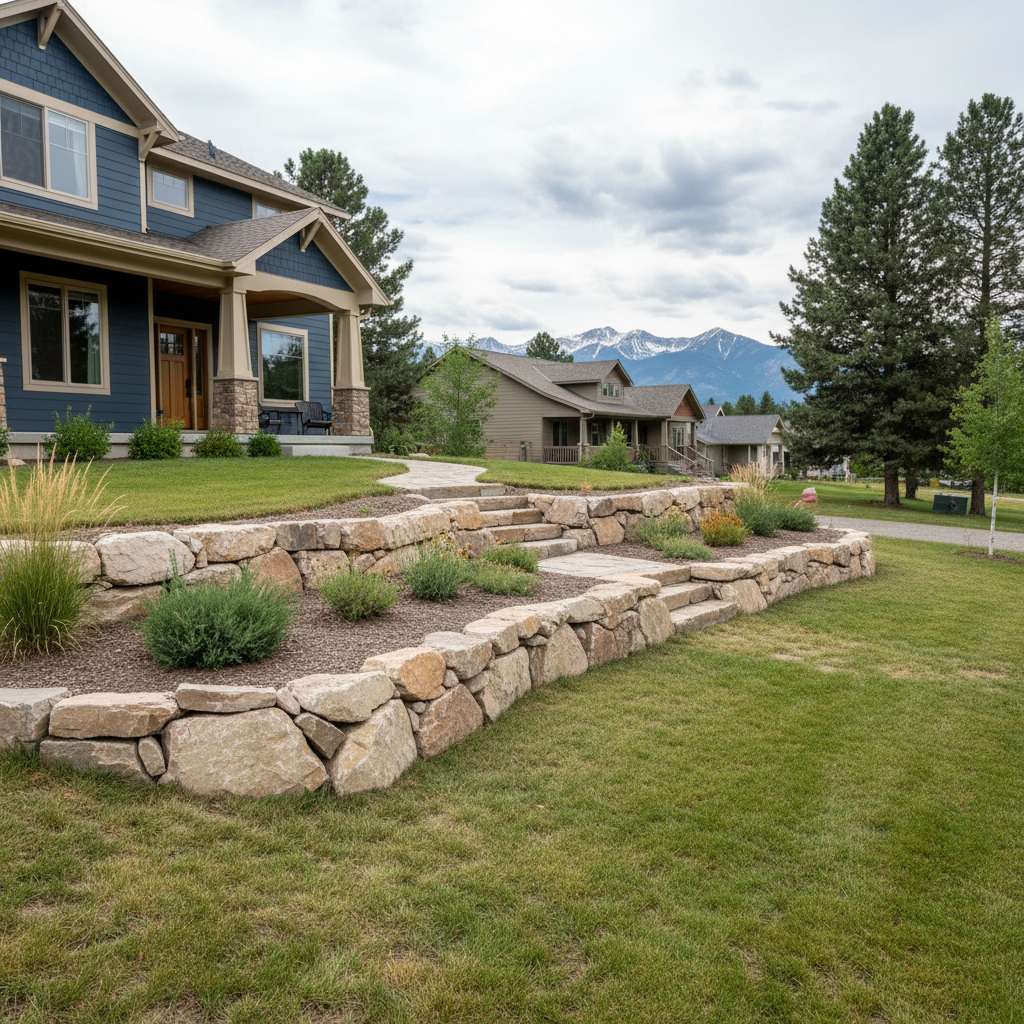
You're staring at your yard, right? Maybe it's got a tricky slope, or you're dreaming of some flat, usable space. Perhaps you're just plain tired of erosion eating away at your property. Often, a retaining wall is the perfect fix. But let's be real: this isn't some quick weekend DIY project, especially not here in Missoula.
Why Retaining Walls Are a Big Deal in Missoula
We see all sorts of terrain around here. From the really steep hillsides up in the Rattlesnake neighborhood to the gentler slopes out near the Bitterroot, managing elevation is a huge part of landscaping. A well-built retaining wall isn't just about looking good; it's about solid engineering, proper drainage, and keeping your property safe.
Believe me, I've seen what happens when a wall isn't put together correctly. It starts to lean, cracks appear, or it can even completely collapse—especially after a heavy spring melt or one of our summer downpours. That's more than just an eyesore; it's dangerous, and fixing it costs a bundle. The ground here, with its mix of clay and river rock leftover from those glacial Lake Missoula floods, can be pretty challenging. It expands and contracts, and if you don't plan for that, your wall simply won't last.
Typical Retaining Wall Jobs We Handle
Most folks in Missoula call us for a few main reasons when they're thinking about retaining walls:
- Making Your Yard Level: This is probably the most common request. You've got a sloped yard, and you want a flat spot for a patio, a garden, or just somewhere for the kids to play. We build walls that create these terraces, turning otherwise useless land into something functional and beautiful.
- Stopping Erosion: If you've got a bank that's constantly washing away, especially near a creek or a drainage path, a retaining wall can really stabilize it. It keeps the soil from moving and protects your landscape.
- Garden Beds: Sometimes it's not about a huge slope, but just wanting raised garden beds that are easy to maintain and look sharp. These are usually smaller, sure, but they still need good drainage and a solid foundation.
- Supporting Your Driveway: If your driveway is cut right into a hillside, you might need a retaining wall to hold back the earth and prevent it from slumping.
Each of these situations demands a different approach. You wouldn't build a small garden bed wall the same way you'd build a six-foot wall holding back a whole hillside, would you?
What Actually Goes Into a Good Retaining Wall?
It's not just about stacking blocks or rocks, you know. There's a lot more happening behind the scenes:
- A Solid Foundation: This is absolutely crucial. You need a sturdy, level base that's deep enough to stop frost heave. Here in Missoula, where we get deep freezes, ignoring this is just asking for trouble. We're talking about digging down past that frost line, making sure the base is compacted just right.
- Drainage: Water is the ultimate enemy of any retaining wall. You need a way for water to get through or around the wall, not build up behind it. This usually means gravel backfill, perforated pipe (what we call a 'French drain'), and sometimes weep holes. If water can't escape, it creates hydrostatic pressure, and that's when walls start to bulge and fail.
- Choosing Materials: You've got options: natural stone, concrete blocks, timber, even gabion baskets. Each has its own pros and cons when it comes to cost, how it looks, and how long it lasts. We'll help you pick what fits your budget and your property's style best. For instance, some of those older homes in the University District really shine with natural stone, while a newer build might prefer a cleaner block look.
- Engineering & Permits: For taller walls, typically anything over four feet, you'll need an engineer's stamp and a city permit. This isn't just red tape; it's about safety and making sure the wall is designed to handle the load it's holding. We can walk you through that whole process.
Why Local Expertise Really Counts
You can read all the DIY articles you want online, but they don't account for Missoula's specific conditions. They don't know about our clay soils, our freeze-thaw cycles, or the particular rules from the city planning department.
When you're dealing with something as fundamental as holding back earth, you want someone who truly understands the local environment. We've been building walls here for years at Missoula Landscaping Company. We know what works, what doesn't, and why. We understand the local geology and weather patterns in a way a national chain or an out-of-town contractor simply can't.
Seriously, don't cut corners on a retaining wall. It's an investment in your property's stability and value. Get it done right the first time, and you won't have to worry about it for decades.